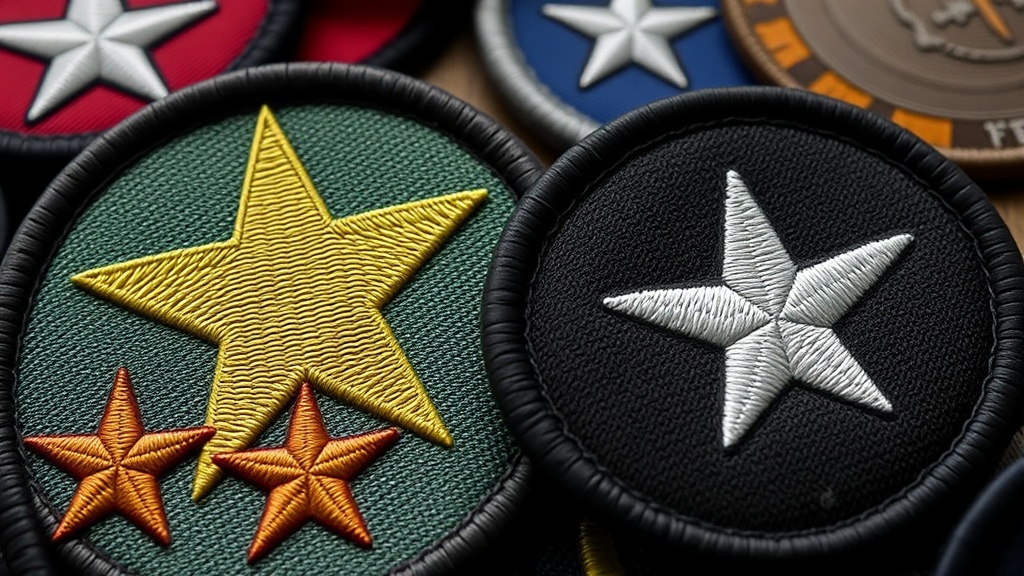
5 Rare Military Patches Every Collector Dreams of Owning

The 101st Airborne Screaming Eagle Shoulder Patch
The German WWII Afrika Korps Sleeve Insignia
The OSS Office of Strategic Services Patch
The China-Burma-India Theater Patch
The Original Navy SEAL Team 6 Trident Patch
This post breaks down five of the most sought-after military patches in the collecting world, explaining exactly what drives their value, how to avoid expensive fakes, and where serious collectors turn to find them. Whether you're building a focused collection around a single division or just want to understand what separates a $10 souvenir-shop repro from a four-figure grail, these five patches represent the pinnacle of militaria collecting within the Bottles, Caps & Smalls category.
What makes a military patch rare and valuable?
Scarcity, historical significance, and condition are the three main factors that determine whether a patch commands top dollar. A unit that existed for only six months and saw heavy combat will almost always produce fewer surviving patches than a long-standing garrison division stationed stateside for the entire war. (That math is simple.) The catch? Condition matters just as much as scarcity. A rare patch with moth holes, fading, or a rotted backing will sell for a fraction of what a crisp, unworn example fetches at auction.
Here's the thing: provenance adds a premium that can't be faked. If a patch can be documented to a specific soldier — through a discharge paper (WD AGO Form 53-55), a period photograph, or a named grouping sold by the family — collectors will pay significantly more. Original patches from the 1940s were often produced by local shops in England, Italy, or the Pacific theater, so variations in embroidery style, thread type, and backing color are common. These theater-made variations are frequently more desirable than standard-issue pieces because they tell a concrete story about where the unit served and who made their insignia.
Which military patches are considered the holy grail for collectors?
The five patches below represent some of the most elusive and desirable pieces in the hobby, spanning World War I, World War II, and early Cold War special units that operated in the shadows.
1. The 506th Parachute Infantry Regiment "Currahee" Patch
This patch is instantly recognizable: a white parachute superimposed on a black Airborne tab, often accompanied by the regiment's distinctive "Currahee" battle cry. The 506th PIR — immortalized in Band of Brothers — jumped into Normandy on D-Day, fought at Bastogne during the brutal winter of 1944, and ended the war at Hitler's Eagle's Nest. Original WWII examples with the correct blue-bordered Airborne tab and theater-made embroidery are among the most prized U.S. Airborne insignia.
Worth noting: the 506th had several authorized and unauthorized variants throughout the war. Some feature silver bullion wire on officer's dress patches; others use standard wool felt with cotton thread for the enlisted man's combat jacket. A genuine D-Day period example in excellent condition can easily exceed $800 at auction, while named groupings with documented combat jumps have sold for well over $2,500.
2. The OSS Shoulder Sleeve Insignia
The Office of Strategic Services — the direct predecessor to the CIA — operated behind enemy lines across Europe, North Africa, and Asia. Their shoulder patch features an eagle clutching a gold baton above the letters "OSS" on a dark blue shield. Because the organization was deliberately secretive and relatively small in number, original patches are genuinely scarce and almost never appear in large lots.
Reproductions flooded the market after spy-themed movies and streaming series became popular. That said, authentic OSS patches have specific construction traits: a twill or wool backing, the correct shade of navy blue (not black), and a slightly imperfect registration between the eagle and letters on theater-made examples. Expect to pay between $400 and $1,200 for a verified original, with bullion variants commanding the highest prices.
3. The 1st Infantry Division "Big Red One" WWI Variation
The oldest continuously serving division in the U.S. Army carries one of the most iconic patches ever designed: a simple green numeral "1" on a khaki or olive drab background. WWI-era examples are the true crown jewels of 1st ID collecting. Early variations include hand-sewn wool numeral "1"s on olive drab wool, some with a darker green felt backing and rough, hand-finished edges.
These patches were worn by soldiers who fought at Cantigny, Soissons, and the Meuse-Argonne Offensive. Because they are now over a century old, surviving examples in solid, unmothed condition are genuinely hard to locate. A confirmed AEF (American Expeditionary Forces) example with no mothing and strong color can bring $300 to $600 depending on the specific variant and any accompanying paperwork.
4. The American Volunteer Group "Flying Tigers" Patch
Before the United States officially entered WWII, the AVG fought Japanese air and ground forces in China and Burma under the command of Claire Chennault. Their unit patch shows a winged tiger leaping through a V-for-victory symbol. The design was created by the Walt Disney Studios — a real piece of trivia that drives serious collector interest and makes the patch instantly recognizable even outside militaria circles.
Original AVG patches were produced in limited numbers in Burma and China, often on cotton or light wool with silk or rayon thread. You'll find two main types: the larger leather jacket version (often with a painted or heavily embroidered tiger on cowhide) and the smaller uniform patch meant for the left shoulder. A documented original uniform patch with clear provenance can sell for $2,000 or more, while a named leather jacket with the original patch has sold for five figures.
5. The 23rd Headquarters Special Troops "Ghost Army" Patch
This unusual unit used inflatable tanks, sound effects, radio deception, and bogus radio traffic to fool German forces across Europe from Normandy to the Rhine. Their shoulder patch — featuring a ghost holding a lightning bolt — is one of the most visually striking and conversation-starting designs of the entire war. Like the OSS, the Ghost Army was small, mobile, and highly secretive, so original patches are rare and almost never turn up in estate sales without other supporting material.
Most authentic examples have a felt or wool backing with embroidered details in white, gray, and red. Because the unit's full story only became widely known after declassification in recent decades, prices have climbed sharply as demand has outpaced supply. A nice example with good color and no damage now runs $500 to $900, with named groupings selling for considerably more.
| Patch Name | Era | Unit Type | Rarity Factor | Typical Price Range |
|---|---|---|---|---|
| 506th PIR "Currahee" | WWII | Airborne Infantry | High | $400 – $900+ |
| OSS Shoulder Patch | WWII | Intelligence / Special Ops | Very High | $400 – $1,200 |
| 1st Infantry Division (WWI) | WWI | Regular Infantry | Moderate to High | $300 – $600 |
| AVG "Flying Tigers" | Early WWII | Volunteer Air Unit | Extremely High | $2,000+ |
| 23rd HQ "Ghost Army" | WWII | Deception Unit | Very High | $500 – $900 |
How can you spot an authentic rare military patch?
Authentic patches show specific construction details — embroidery style, backing material, and thread colors — that reproductions rarely get right. Start by flipping the patch over. WWII-era U.S. patches usually have a khaki, olive drab, or dark blue wool or cotton twill backing. The edges should show some age-appropriate fraying or oxidation, not the machine-cut perfection you see on modern Chinese imports.
Look closely at the embroidery itself. Period pieces were sewn on Schiffli machines or by hand in small shops, so the stitching has a slightly irregular, organic quality. Modern reproductions often use polyester thread that glows brightly under a black light — a quick test any collector can perform at a show or in a dim room. (Natural cotton and wool fibers from the 1940s will not fluoresce.)
Here's the thing: reference books are your best defense against getting burned. U.S. Army Patches of World War II by Christopher P. Brown and Barry Jason Stein provides detailed photos of known originals with close-ups of thread and backing. For online research, the U.S. Militaria Forum has decades of archived discussions where experienced collectors dissect specific variants thread by thread. Spend an hour reading before you spend a dollar bidding.
Where should you buy rare military patches online?
Trusted dealers, established auction houses, and specialized militaria forums are the safest places to spend serious money on rare patches. eBay can yield genuine deals, but it's also flooded with Chinese reproductions sold as "original WWII" by sellers who either don't know better or simply don't care. If a price seems too good to be true — a $50 "authentic" OSS patch, for example — it almost always is.
For high-end pieces with documented history, Heritage Auctions regularly lists verified militaria groupings with full provenance and expert examination. International Military Antiques (IMA) offers a rotating selection of original patches alongside uniforms, equipment, and field gear. Both houses stand behind their descriptions with return policies that protect buyers.
That said, building relationships with small dealers at major shows like the MAX Show (Militaria Show) in Louisville or the SOS (Show of Shows) in Louisville often leads to better pieces than you'll find listed online. These dealers rely on reputation and repeat business, not anonymous feedback scores. Bring a 10x loupe, know your prices from recent auction records, and don't be afraid to walk away if the story doesn't match the stitching.
What are the best ways to store and display valuable patches?
Acid-free materials, controlled humidity, and minimal handling keep rare patches in top condition for decades. Never store valuable patches in standard cardboard or cheap plastic sleeves that off-gas chemicals and trap moisture. Instead, use archival-quality polyethylene pages from Gaylord Archival or acid-free cotton museum boards that breathe and won't discolor the fabric over time.
For display, shadow boxes with UV-protective glass (look for products from Nielsen Bainbridge or Michaels' custom framing department) prevent fading while keeping dust and pests out. Keep the box out of direct sunlight and away from heating vents. Humidity levels between 45% and 55% are ideal — too dry and wool becomes brittle and cracks; too damp and mildew sets in, destroying both value and appearance.
Worth noting: if you plan to sell eventually, resist every urge to clean or "brighten" an old patch. A gentle dusting with a soft camel-hair brush is fine, but water, soap, stain removers, or aggressive brushing can destroy original finishes, fade dyes, and reduce value by half overnight. Let the patina, the dust, and the minor flaws tell the story. Patience pays more than polish.