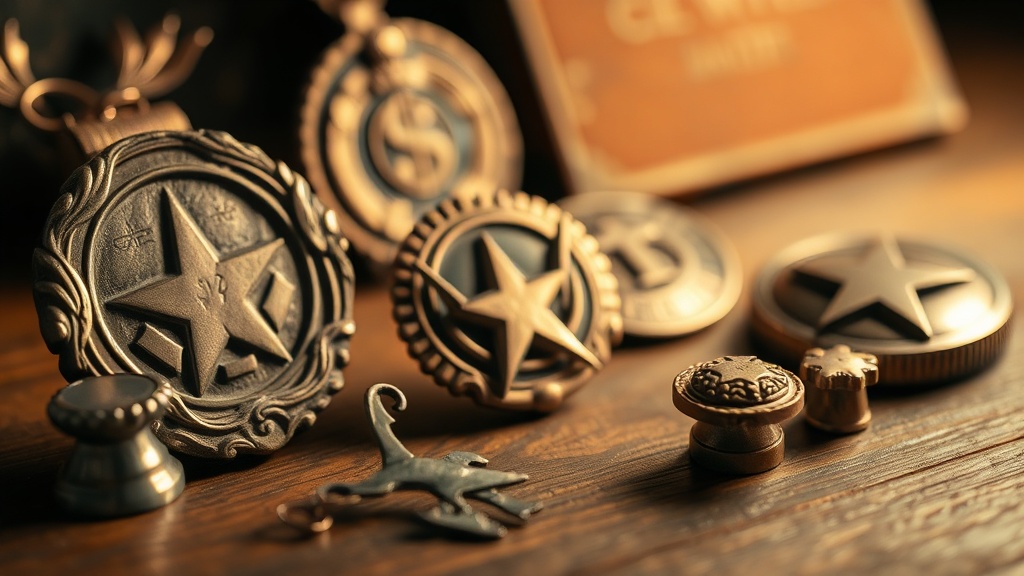
Identifying Authentic Vintage Metal Insignia and Small Collectibles

What Defines an Authentic Vintage Military Pin or Small Collectible?
This post covers the specific physical markers that separate genuine vintage metal insignia—such as unit pins, lapel pins, and small metal emblems—from modern reproductions. Collectors often struggle with the distinction between a high-quality replica and an original piece of history. Understanding the material composition, the weight, and the manufacturing techniques used during specific eras is the only way to build a collection with true integrity.
When you're looking at a small metal collectible, the first thing you notice is the weight. Modern reproductions often use lighter alloys or even plastic cores to save on production costs. An original piece from the mid-20th century, for example, often possesses a certain heft that a cheap knock-off simply can't replicate. If a piece feels hollow or unnaturally light in your palm, it's a red flag. This isn't just about the weight; it's about the density of the metal itself. Original brass, bronze, or silver-plated pieces have a distinct feel that tells a story of durability and intended service.
One of the most telling signs of authenticity lies in the reverse side of the item. Look at the clutch, the pin fastener, or the rim. Authentic vintage pieces often show signs of hand-finishing or older manufacturing methods. You might see slight imperfections in the metal's texture or even a non-uniformity in the plating. Modern pieces are often too perfect—they look machine-made and sterile. A genuine piece of history has lived a life. It might have slight scratches from being pinned to a uniform, or the metal might show a natural patina that hasn't been artificially applied with chemicals.
How Can You Spot a Modern Reproduction of Metal Insignia?
The easiest way to spot a fake is to look at the edges and the fine details. Modern manufacturing, particularly laser cutting and high-speed die-striking, produces incredibly sharp, uniform edges. While this sounds like a good thing, it's often a giveaway. Vintage pieces were frequently struck with older dies that resulted in slightly softer edges or more organic shapes. If the lettering on a tiny lapel pin looks too crisp or perfectly centered, you might be looking at a modern reproduction. Real vintage items often have subtle irregularities that prove they weren't produced by a computer-controlled machine in a factory last year.
Another area to inspect is the patina. Many sellers attempt to "age" their items using dark washes or acids to make them look old. However, true patina develops over decades of oxidation. It's a deep, integrated change in the metal's surface. Artificial aging often looks like a surface stain—it's shallow and can sometimes be rubbed off with a bit of pressure or a damp cloth. If the "aged" look seems to sit on top of the metal rather than being part of it, proceed with caution. You can learn more about the chemical properties of various metals through resources like the Britannica entry on metallurgy to better understand how oxidation works.
Don't overlook the back of the pin or emblem. A vintage pin often has a more rugged, less polished reverse side. Modern replicas frequently have a very smooth, shiny back because they are designed for mass consumption and aesthetic perfection. If you see a perfectly smooth, mirror-like back on a piece that claims to be from the 1940s, something is likely wrong. The back of a military-issue item was rarely a priority for the soldier wearing it, so it's often functional and unpolished.
Why Does Metal Composition Matter for Long-Term Value?
The metal used in a piece dictates how it will age and how much it will be worth in the future. Bronze, brass, and various steel alloys were the standard for many years. A collector needs to know if they are holding a solid brass piece or a plated piece of zinc. Zinc-based alloys are common in cheaper modern reproductions and can actually degrade over time, leading to "zinc rot" where the metal becomes brittle and crumbles. This is a nightmare for collectors who want to maintain a stable inventory.
When building a collection of small metal items, you aren't just buying an object; you're buying a piece of a specific era's manufacturing capability. For instance, during certain conflicts, metal shortages meant that certain types of insignia were made with more economical materials. Knowing these historical shifts allows you to identify why a certain piece looks a certain way. You can research historical material shortages through the National Archives to see how wartime production affected even the smallest military details.
Checking the metal's reaction to a magnet is also a quick, though not foolproof, test. While many high-quality pieces are non-magnetic (like brass or bronze), many lower-grade steel-based items will react. However, be careful, as some high-quality steel-based items are also magnetic. It's an indicator, but not a definitive proof. The goal is to look at the totality of the evidence: weight, texture, reverse-side detail, and the way the patina has aged.
Keep an eye out for the "feel" of the item. A collector's intuition is built through looking at hundreds of these small pieces. Eventually, you won't even need to look for the flaws—you'll just know when a piece feels "wrong." Whether it's a tiny brass star or a complex metal unit crest, the details are always there for those willing to look closely.
- Always inspect the reverse side first.
- Check for "perfect" edges which signal modern machinery.
- Test for weight and density.
- Observe the patina for depth and integration.