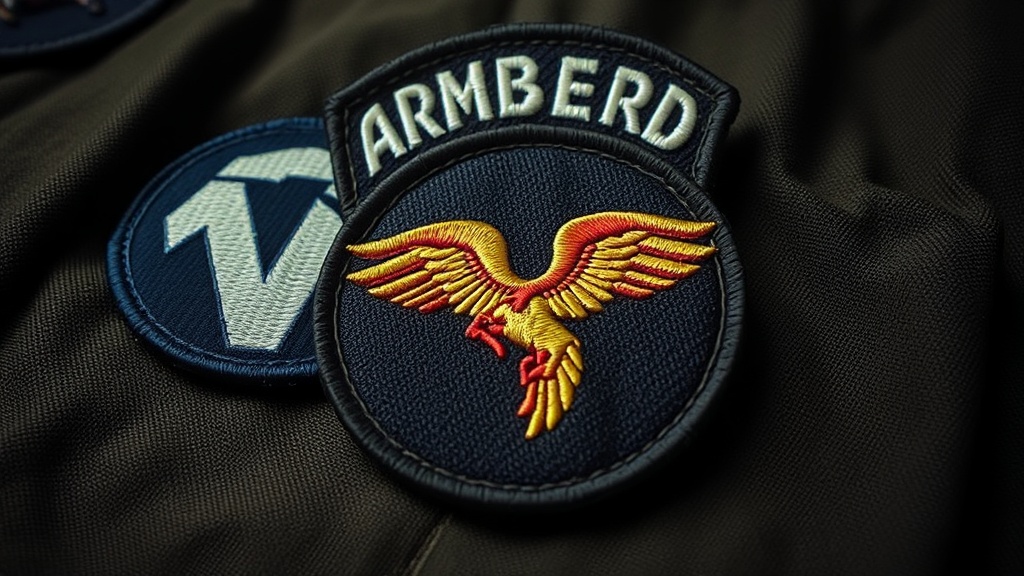
Rare Subdued Patches from Forgotten Airborne Units

The 82nd Airborne Division Subdued Variants
101st Airborne Division Low-Visibility Insignia
Special Operations Paratrooper Identification Patches
Most collectors assume that "subdued" simply means any patch with a low-visibility color scheme, but that's a mistake. A true subdued patch is a specific piece of military history designed for tactical concealment, often representing units that existed for a very short window of time. This post examines the specific subdued insignia of forgotten or short-lived airborne units, why they are harder to find than standard combat patches, and what makes their construction unique.
When you're hunting for high-end collectibles, you aren't just looking for a cool design. You're looking for scarcity. The transition from full-color to subdued colorways—like the shift from bright greens to olive drab or tan—often coincides with the exact moment a unit was deactivated or reorganized. That timing is everything.
What Defines a Rare Subdued Airborne Patch?
A rare subdued airborne patch is defined by its limited production run, its specific tactical colorway (like OCP, Multicam, or old-school Spice Brown), and the historical brevity of the unit it represents. Most collectors focus on the big names like the 82nd Airborne or the 101st, but the real value often lies in the "ghost" units—those that were activated for a specific deployment and then vanished from the order of battle.
Look for these three markers of authenticity and rarity:
- Thread Density: High-quality vintage patches often have a higher stitch count. If the design looks "fuzzy" or lacks definition, it might be a modern, low-quality reproduction.
- Edge Finishing: Genuine military-issue patches usually feature a clean, tight merrowed edge.
- Color Saturation: Subdued patches aren't just "darker"; they use specific pigments designed to blend into specific environments (e.g., the tan tones for desert operations).
I've spent years looking at how thread colors change over time. A patch from the 1990s will look fundamentally different from a 2020s tactical patch, even if they both claim to be "subdued." (It's a subtle distinction, but you'll notice it once you hold them under a bright light.)
If you're just starting out, you might want to look into the history of military insignia to understand how these symbols evolved from heraldry to tactical tools.
Why Are Certain Airborne Patches So Expensive?
The price of a patch is driven by the intersection of historical significance and the difficulty of sourcing the item. A "forgotten" unit might only have had a few hundred patches produced before the unit was reflagged or disbanded. This creates a natural bottleneck in the supply chain. Unlike standard issue gear, you can't just go to a surplus store and buy a "ghost unit" patch.
Here is a breakdown of how rarity typically affects the market value of airborne insignia:
| Unit Status | Typical Rarity | Value Driver |
|---|---|---|
| Active Duty (e.g., 82nd) | Common | High volume, easy to find. |
| Deactivated (Post-Cold War) | Moderate | Limited surplus availability. |
| Specialized/Short-Lived Units | High | Extremely low production numbers. |
| Experimental/Prototype | Very High | Almost zero official distribution. |
That said, don't assume a high price always means high quality. I've seen "rare" patches that are actually just modern "repro" pieces made to look old. Always check the backing and the thread tension. If you're unsure about the condition of a piece you just bought, you might want to check out my guide on cleaning and restoring vintage embroidered patches safely to ensure you don't ruin the fabric.
How Do You Identify a Genuine Vintage Subdued Patch?
You identify a genuine vintage subdued patch by examining the thread material, the backing texture, and the specific color palette used during that era. Modern patches often use synthetic polyester threads that have a certain "sheen" to them. Vintage patches—especially those from the mid-20th century—often use cotton or older nylon-based threads that have a more matte, organic appearance.
One trick I use is the "light test." Hold the patch up to a single light source. If the threads look too uniform and plastic-like, it's likely a modern reproduction. Real vintage patches often have slight irregularities in the embroidery. These aren't flaws; they're evidence of the manufacturing processes of the time.
The catch? The "subdued" look is often faked by modern manufacturers. They take a bright, colorful patch and run it through a wash or use a digital filter to dull the colors. This is a common tactic in the low-end collector market. A real subdued patch was manufactured that way from the start—the colors were never bright to begin with.
When you're looking at specialized units, pay attention to the symbols. For example, the U.S. Army has very strict guidelines for how unit insignia is presented. A "forgotten" unit might use a variation of a standard symbol that was only authorized for a specific, short-term mission. That's where the real treasure is found.
Common Mistakes in Identifying Airborne Insignia
- Assuming "Subdued" means "Black and White": Many people think subdued only means grayscale. In reality, it can be olive, tan, coyote, or even dark blues depending on the era.
- Ignoring the Backing: The back of the patch tells as much of a story as the front. Velcro (hook and loop) is a relatively modern addition for many combat uniforms. If a "vintage" patch has high-quality Velcro, it might be a newer-production version.
- Overlooking the Thread Type: As mentioned, the difference between silk-like sheen and a matte finish is a major tell.
I once found a patch that looked like a standard 101st Airborne insignia, but the thread was a slightly different shade of tan. It turned out to be a specific variant used for a short-term deployment in a specific theater. It was a small detail, but it changed the value of the piece entirely.
Where Should Collectors Look for Rare Patches?
Serious collectors look at specialized auction sites, estate sales, and even military surplus auctions rather than general marketplaces. While eBay is a staple, the real "hidden" gems are often found in the "junk" lots of collectors who are clearing out their inventories. You have to be willing to dig through the common stuff to find the rare, subdued pieces of forgotten units.
If you're serious about building a collection, you need a system. I've written extensively about sorting and categorizing your vintage patch inventory. Without a way to track what you have, you'll eventually lose track of those rare finds amidst the common ones. A disorganized collection is a wasted collection.
Also, keep an eye on the specialized forums. The people who know the most about these forgotten units are often hanging out in niche communities, not the mainstream social media-sphere. They aren't just looking for "cool stuff"; they're looking for historical accuracy.
The reality is that the more specialized your knowledge becomes, the more successful your collecting will be. If you can identify a specific subdued variant of a unit that only existed for six months in 1984, you're playing a completely different game than the person just buying "cool-looking" patches. It's a game of details.
Don't be afraid to ask questions in the community. Most of us are happy to help if you approach it with a genuine interest in the history rather than just the monetary value. The history of these airborne units is often lost, and these patches are sometimes the only physical evidence left of their existence.